When it is time to prepare your R&D tax relief claim, can your team explain the technical work, show the supporting evidence and trace the costs back to their source? A well-written report is important, but it is only one part of the picture. The records behind it help make the claim understandable to someone who was not involved in the project.
Why waiting until year-end can leave gaps
If the claim process begins only after the work has finished, teams may find themselves reconstructing technical decisions, estimating time spent and searching for supporting records. Details about unsuccessful tests, changes in direction and project boundaries can become harder to establish. Our guide, 'Why R&D Claims Need to Be Built to Last in Today's HMRC Environment', explores a more practical approach: build the evidence file as the project develops, rather than relying on memory when the claim is due.
Four foundations of an evidence-led R&D claim
The guide brings together four connected areas: technical ownership, evidence captured during delivery, traceable costs and consistent filing. Together, they provide a framework for reviewing how your claim is prepared—not just how the final report reads.
1. Explain the technical work clearly
A strong technical narrative should describe more than the business objective. It should explain the starting point, the advance sought, the uncertainty encountered and the work undertaken to address it. Involving the competent professionals responsible for the technical work helps connect the narrative to the project itself. Test results, iterations and outcomes can then support that explanation, including what the team learned when an approach did not work.
2. Capture evidence while the project is happening
Project records, design notes, test plans, issue logs and dated decisions can help explain the development process. Keeping them organised during delivery makes them easier to use later. The aim is not to create paperwork for its own sake. It is to retain a clear account of what was attempted, why it was technically uncertain and what happened next. A later report can organise that evidence, rather than having to recreate it.
3. Make the costs traceable
The financial side of the claim needs a clear evidence trail too. The guide explains how to connect costs to the relevant project, source record, cost category and allocation method. Payroll reports, invoices, contracts and usage records may form part of that trail. Where costs are apportioned, the basis should be documented and capable of being followed. Recording assumptions and exclusions also helps explain how the claimed amount was reached.
4. Keep the filing documents consistent
The technical report, Additional Information Form (AIF), corporation tax computation and CT600 return should present a consistent picture. Reviewing them together before submission can help identify discrepancies between the project descriptions, expenditure figures and tax calculation. Clear responsibilities and dated sign-offs help technical, finance and tax teams work from the same information, rather than preparing each part of the filing pack in isolation.

How well could you explain your claim today?
Before your next submission, consider these questions:
- Can we show the evidence behind the technical uncertainties described in our claim?
- Have the relevant technical professionals contributed to the explanation?
- Can we trace claimed costs to source records and explain any apportionments?
- Do the report, AIF, computation and CT600 agree?
A practical starting point for your next claim
If the answers depend on memory or records that still need to be located, that is a useful starting point for reviewing your process. Our guide includes practical comparisons, an illustrative worked example, self-assessment questions and a checklist to help you identify gaps before the next claim cycle. Whether you are preparing your next submission or taking a fresh look at your approach, it offers a clear framework for bringing technical evidence, costs and filing controls together.
Download the free R&D guide
Explore Why R&D Claims Need to Be Built to Last in Today's HMRC Environment and take the next step towards a more organised, evidence-led claim process. Download the guide free, with no sign-up required.
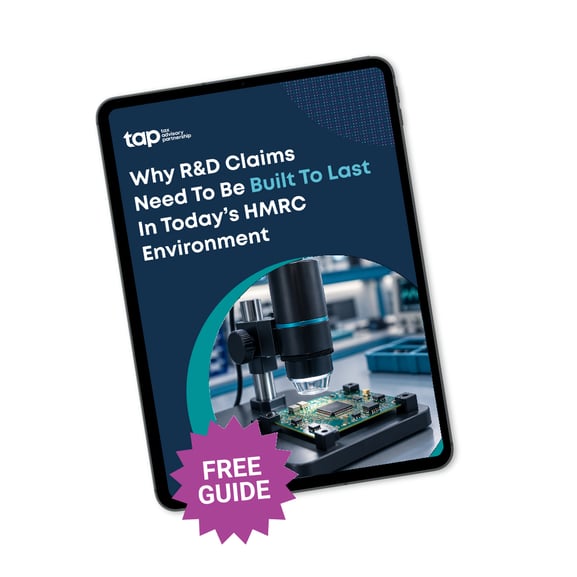
Build a Stronger R&D Tax Relief Claim
Check out our practical guide on preparing robust, evidence-led R&D tax relief claims, covering how to document your technical work, capture supporting evidence as projects develop and clearly link costs to qualifying activities.
>> Click here to download the guide for free now



.png?width=596&name=Designer%20(10).png)